

Portable Force Plate: A Guide to Objective Clinical Assessments
Team Meloq
Author
A portable force plate is a device that measures the ground reaction forces produced by a patient or athlete. It transforms subjective observations of movement into concrete, measurable data, taking the guesswork out of movement analysis. This provides clinicians and coaches with quantitative information to support evidence-based decisions regarding strength, power, and balance.
From Subjective Guesswork To Objective Precision
Historically, movement assessment has been largely observational. It relied on the trained eye of a physical therapist watching a patient squat and noticing a slight wobble, or a coach judging an athlete's jump as "less explosive" than the previous week. While clinical experience is invaluable, it is analogous to diagnosing an engine problem by sound alone—it provides a general idea but lacks the precise data required for a definitive conclusion.
A portable force plate introduces a new level of precision. It functions as an advanced scale that measures not only an individual's weight but also how they apply force to the ground from moment to moment. It captures the complex interplay of forces during any movement, providing a clear, numerical picture of a person's abilities.
This is the difference between saying, "It appears you are favouring your left leg," and stating with confidence, "There is a 17% asymmetry in peak force production between your left and right legs during a countermovement jump."
The Shift to Data-Driven Practice
The transition from qualitative observation to quantitative measurement is central to modern physiotherapy and sports performance. It allows practitioners to:
- Establish Objective Baselines: Create a reliable starting point to track a patient's or athlete's progress over time.
- Identify Subtle Deficits: Uncover hidden imbalances and weaknesses that are often impossible to detect with the naked eye.
- Validate Interventions: Provide objective evidence that a rehabilitation exercise or training programme is delivering measurable improvements.
Portable force plates are a key technology driving this shift, providing the raw data that informs how data analytics drives better clinical decisions. The demand for such tools is growing as professionals increasingly require reliable, portable assessment solutions.
By quantifying movement, we replace uncertainty with confidence. A portable force plate gives clinicians the objective data needed to support their clinical reasoning, track recovery with precision, and communicate progress more effectively to patients and athletes.
Ultimately, integrating a portable force plate into a clinical workflow empowers practitioners to make more informed decisions. It builds a solid foundation for guiding patient recovery and fine-tuning athletic performance, ensuring every step forward is backed by objective data. To explore this philosophy further, consider our article on the key principles behind objective measurement in our detailed article.
What Portable Force Plates Actually Measure
At its core, a portable force plate is an instrument that measures what the human eye cannot see. It translates every subtle movement—every push, sway, and jump—into objective, quantitative data. This is not merely about collecting numbers; it is about understanding the mechanics behind an individual's strength, balance, and explosive power.
Instead of relying on subjective feelings or visual estimates, practitioners obtain a clear, numerical record of a person's functional abilities. This data helps clinicians and coaches pinpoint specific strengths and weaknesses, turning abstract observations into concrete, actionable insights that can lead to better outcomes.
The journey from guesswork to data-driven precision is what makes this technology so valuable.
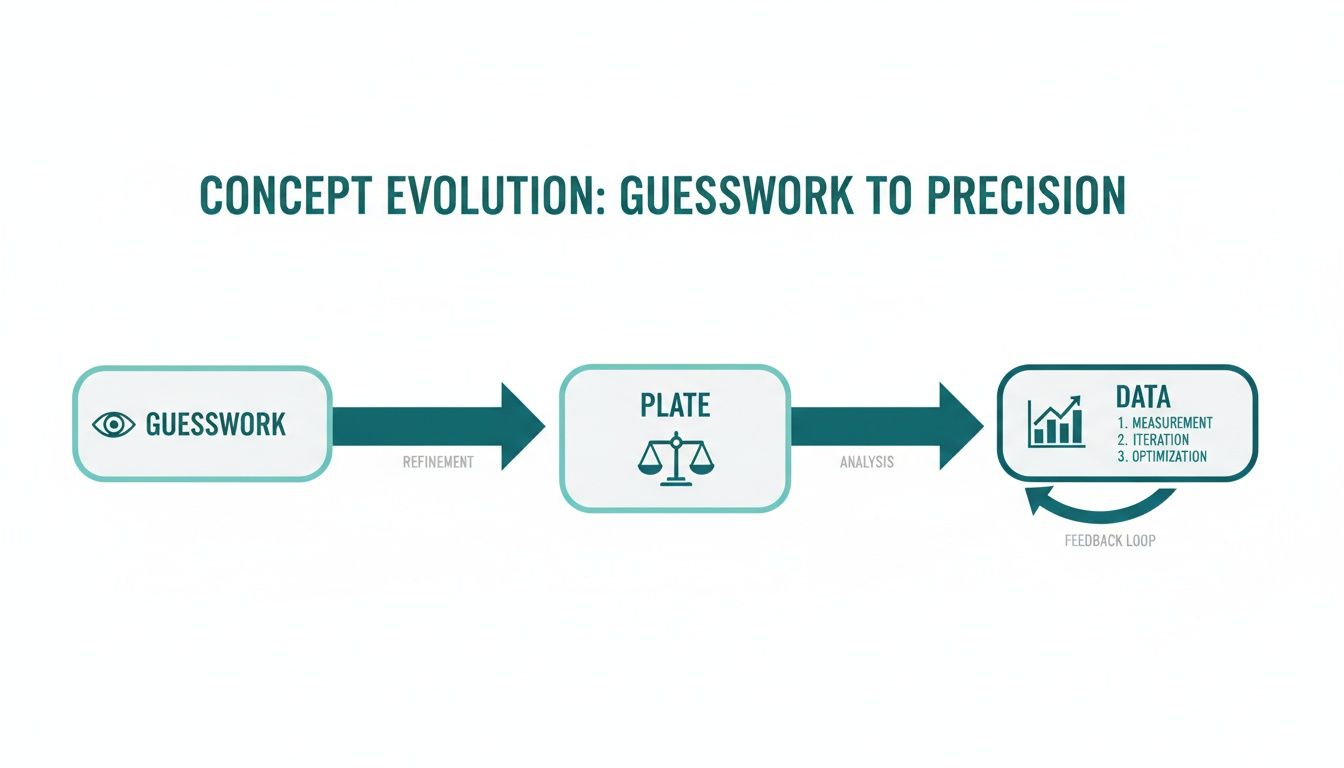
This visual captures how force plates bridge the gap, moving practitioners from subjective interpretation to objective, data-backed conclusions. To understand how this works in practice, let's examine the three main categories of metrics provided by a portable force plate.
Decoding Force Production
Force production can be considered the "engine" of human movement. Metrics in this category reveal not just the total amount of force an individual can generate, but also the rate at which they can apply it. This is fundamental to a wide range of activities, from a powerful vertical jump to the simple act of rising from a chair.
Two of the most insightful metrics are:
- Peak Force: This represents the absolute maximum force produced during a movement, such as a squat or jump. It is a direct measure of an individual's maximal strength output.
- Rate of Force Development (RFD): This metric indicates how quickly an individual can reach their peak force. RFD is critical for explosive movements. An athlete with a high RFD generates power very rapidly, which is essential for activities like sprinting, jumping, and changing direction (1).
In a clinical setting, tracking these force metrics is invaluable for monitoring rehabilitation. A consistent increase in peak force following knee surgery, for example, provides objective evidence that the recovery programme is effective.
Assessing Balance And Stability
Balance is a dynamic process involving continuous, subtle neuromuscular adjustments to maintain stability. A portable force plate quantifies these adjustments by tracking the Center of Pressure (CoP)—the point of application of the total force on the ground.
The movement of the CoP provides significant information about postural control.
An unstable CoP trace, characterized by excessive swaying or rapid, jerky corrections, may indicate underlying neuromuscular deficits or an elevated risk of falling, particularly in older adults or individuals recovering from lower limb injuries (2).
By analysing CoP data, clinicians can obtain an objective measure of a person's postural control. For instance, a physical therapist might use a single-leg balance test to assess an athlete's stability after an ankle sprain. The force plate provides a precise map of their sway, offering far more detail than visual observation alone.
To delve deeper into this concept, you can learn more about Center of Pressure and its clinical applications.
Unpacking Jump Performance and Asymmetries
Jumping is a fundamental athletic movement that requires a combination of strength, power, and coordination. A portable force plate allows for the dissection of a jump into its component parts, revealing extensive information about both performance and potential injury risk.
This analysis helps connect various performance metrics. The data below provide a comprehensive view of an individual's lower-body power and potential imbalances.
Key Metrics and Their Clinical Relevance
| Metric Category | Specific Metric | What It Tells The Clinician |
|---|---|---|
| Force Production | Peak Force | A direct measure of maximal strength. Is the athlete getting stronger over time? |
| Force Production | Rate of Force Development (RFD) | How quickly can the athlete produce force? Crucial for explosiveness and athletic performance. |
| Balance & Stability | Center of Pressure (CoP) Sway | Quantifies postural control. Increased sway can indicate instability or a higher fall risk. |
| Jump Performance | Jump Height | A clear indicator of lower-body explosive power, typically calculated from flight time. |
| Asymmetry Analysis | Limb Asymmetry | Compares force output between the left and right limbs. A significant difference can be a point of clinical interest. |
The ability to detect imbalances is particularly powerful. By comparing the force output from each leg during jumps, the device can quantify asymmetries. While some degree of asymmetry is normal, a difference greater than a certain threshold (often cited in research as 10-15%) may be considered a point of interest for clinicians (3). It may signal a compensation strategy or incomplete recovery from an injury, which has been associated with an increased risk of re-injury.
For a coach or clinician, this is critical information for return-to-sport decisions. If the data show a persistent imbalance, it may indicate that more targeted rehabilitation is needed before the athlete can safely return to competition. This is about protecting athletes and optimizing their long-term health, all supported by objective data.
Real-World Clinical and Performance Applications
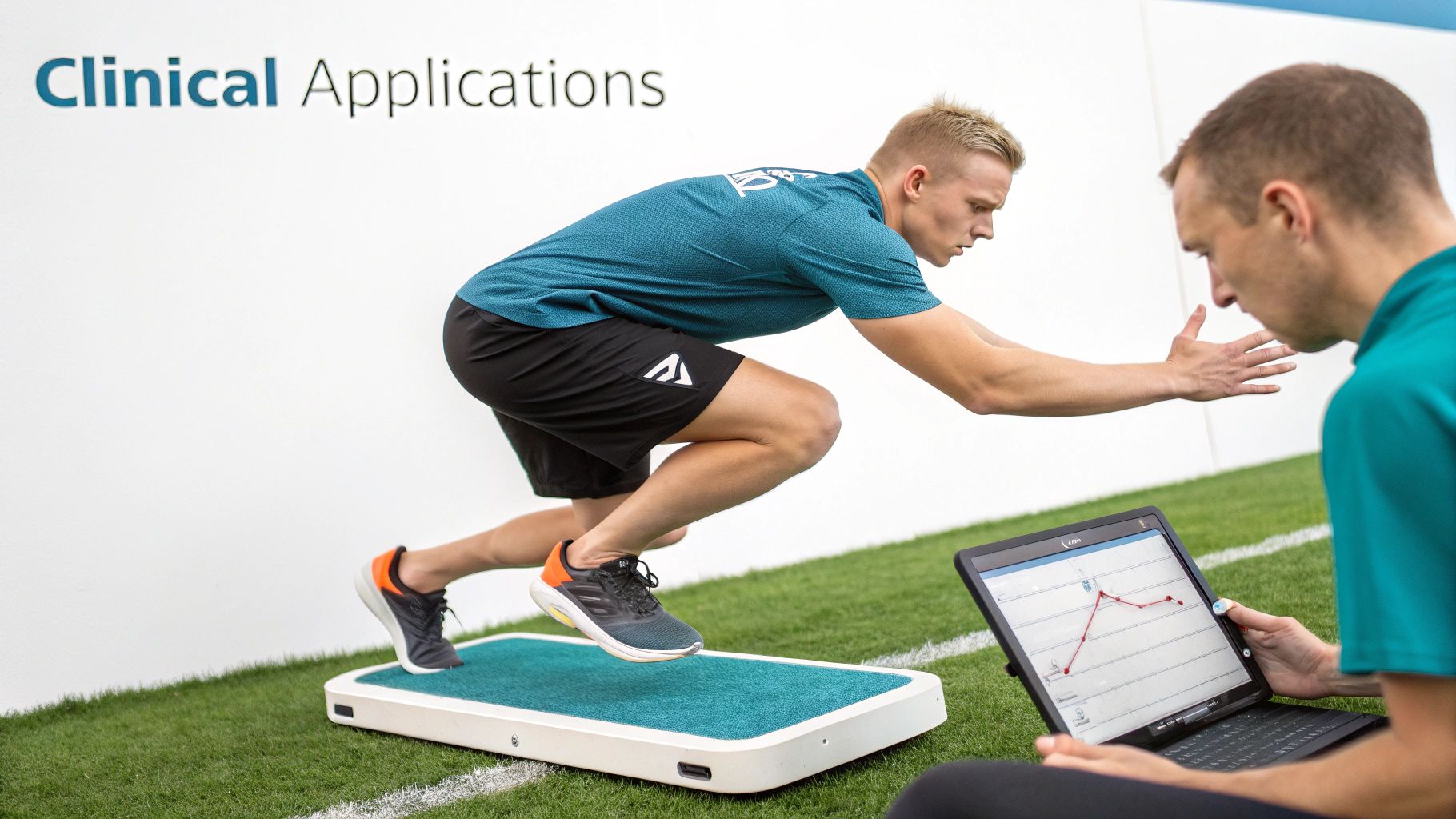
The practical application of portable force plates is where their true value is realised. Their objective data can be used to solve real-world problems for clients and athletes, bridging the gap between the controlled clinical environment and the demands of sport or daily life. For practitioners, this technology provides a powerful lens to guide rehabilitation, screen for risk, and enhance human performance with a level of precision previously confined to research laboratories.
Each of these applications demonstrates how objective data on force and balance can lead to better outcomes, safer protocols, and more confident clinical decisions. The portability of these devices means that high-level assessments can be conducted anywhere, from a sports field to a clinic.
Guiding Post-Surgical Rehabilitation
One of the most immediate and powerful uses for a portable force plate is in post-surgical recovery, particularly following procedures like an ACL reconstruction. A common challenge in ACL rehabilitation is the patient's tendency to subconsciously offload the surgical leg, favouring the uninjured one. This can create persistent strength and loading asymmetries that are often too subtle to be detected by visual observation alone (4).
A force plate makes these hidden imbalances obvious and measurable. By having a patient perform a simple bilateral squat or a countermovement jump, the device can instantly quantify the difference in peak force production between the surgical and non-surgical limbs.
An asymmetry greater than a 10-15% threshold is often cited in scientific literature as a potential risk factor for re-injury when an athlete returns to sport (3). Tracking this metric over time provides an objective marker of progress, confirming whether targeted exercises are effectively restoring symmetrical function.
This data allows for a truly personalised rehabilitation plan. If an asymmetry is identified, the programme can be adjusted to include more unilateral strength work for the weaker limb, ensuring a balanced recovery and, ultimately, a safer return to activity.
Sharpening Return-to-Sport Protocols
Deciding when an athlete is ready to return to competition after an injury is a high-stakes decision for clinicians and coaches. A premature return can significantly increase the risk of re-injury, while excessive caution can disrupt a season. A portable force plate can help remove much of the guesswork from this critical process.
Jump testing, in particular, provides a wealth of information about an athlete's readiness. Metrics such as jump height, reactive strength index, and rate of force development offer direct insights into their explosive power and neuromuscular control—qualities essential for high-level performance.
By establishing a baseline before an injury occurs, clinicians have a clear, objective benchmark to aim for during recovery. An athlete's post-injury performance can be compared directly to their healthy state to determine if they have regained the physical capacity to compete safely.
Screening Fall Risk in Older Adults
Beyond athletics, portable force plates have significant applications in geriatric care, particularly for screening fall risk. Falls are a major health concern for older adults, and identifying at-risk individuals is a key preventative strategy. A central component of this is balance, often quantified as postural sway (2).
A force plate measures postural sway by tracking the minute movements of a person's Center of Pressure (CoP) as they attempt to stand still. Excessive or rapid movement of the CoP can indicate poor postural control and an increased likelihood of instability.
A simple, effective protocol might include:
- Baseline Assessment: Have the individual stand quietly on the plate for 30 seconds, first with eyes open, then with eyes closed.
- Quantify Sway: The software calculates metrics such as CoP sway area or velocity, providing an objective score for their balance.
- Track Interventions: After implementing a balance training programme, the test can be repeated to objectively measure its effectiveness.
This data not only helps identify at-risk individuals but also validates the success of interventions, providing confidence to both the clinician and the patient. You can also learn more about how force plates are used for gait analysis in our detailed guide.
Fine-Tuning Athletic Performance
For healthy athletes, a portable force plate is an excellent tool for performance optimisation. It allows coaches to move beyond tracking simple metrics like weight lifted or distance run and begin analysing the quality of the movement itself. By measuring metrics like Rate of Force Development (RFD), coaches can gain a true understanding of an athlete's explosiveness.
An athlete may be strong (able to produce high peak force) but not powerful (unable to produce that force quickly). Identifying a low RFD allows a coach to programme more specific plyometric or ballistic exercises designed to improve the athlete's ability to generate force rapidly—a key determinant of success in most sports (1). Regular testing provides immediate feedback, allowing training programmes to be adjusted for maximum impact.
How To Choose The Right Portable Force Plate
Selecting the right portable force plate is a significant decision for any practice. It is an investment that should directly serve your clinical goals and the needs of your clients. It is crucial to look beyond marketing claims and focus on the core technology. A methodical approach that prioritises validated performance and everyday usability will ensure the tool you choose becomes an integral part of your practice.
This is not just about comparing technical specifications. It is about understanding how those details translate into trustworthy data, an efficient workflow, and ultimately, better outcomes for your patients and athletes. Making an informed choice begins with asking the right questions—about the science behind the device and its ability to handle the realities of your environment.
Data Accuracy And Scientific Validation
The primary consideration is the trustworthiness of the data. A force plate is only as good as the numbers it produces. It is essential to look for devices that have been independently validated in peer-reviewed scientific studies. This provides evidence that the tool has been scrutinised by the scientific community and confirmed to produce reliable and repeatable data (5).
When a device is accurate, you can be confident that the changes you track over time—such as an increase in jump height or improved balance—are genuine physiological adaptations, not measurement fluctuations. This is non-negotiable when making critical decisions, such as clearing an athlete for return-to-sport or modifying a rehabilitation plan. Without a foundation of accuracy, all collected metrics are questionable.
Sampling Rate: The Need For Speed
The sampling rate, measured in Hertz (Hz), indicates how many times per second the plate measures the applied force. For slow, controlled movements like a balance test, a lower sampling rate may be sufficient. However, for the explosive, rapid movements performed by athletes—such as a countermovement jump or a drop landing—a high sampling rate is essential. These actions occur in milliseconds, and a low rate can miss key data points, such as the true peak force or the rate of force development.
A higher sampling rate provides a clearer, more detailed picture of fast, dynamic movements. For most clinical or performance settings, a sampling rate of 400 Hz or higher is recommended to reliably capture the nuances of explosive force production (5).
Choosing the right force plate involves weighing several critical factors. The following checklist breaks down the key technical and practical considerations you should evaluate.
Portable Force Plate Selection Checklist
| Key Consideration | What To Look For | Why It Matters In Practice |
|---|---|---|
| Accuracy & Validation | Peer-reviewed studies validating the device against a gold standard. | Ensures the data is trustworthy for clinical decisions like return-to-sport. |
| Sampling Rate (Hz) | 400 Hz or higher for explosive movements. | Captures critical details like peak force and rate of force development. |
| Portability | Lightweight, manageable dimensions, easy to carry and set up. | Allows for objective testing anywhere—clinic, gym, or field. |
| Durability | High load capacity, quality materials (e.g., aluminium, steel). | Withstands the demands of a busy environment and heavy use. |
| Software & UX | Intuitive interface, easy test administration, clear data visualisation. | Clunky software wastes time. A good user experience improves efficiency. |
| System Type | Single vs. Dual Plate options. | Single plates are effective for unilateral tests; dual plates for simultaneous bilateral analysis. |
| Integrations | Compatibility with other devices and electronic health records (EHRs). | Creates a connected ecosystem for a holistic view of patient progress. |
This checklist provides a solid framework for evaluation. A device may seem impressive on paper, but if it is difficult to use in a daily workflow, its value is significantly diminished.
Durability And Portability
A portable device must be built to withstand use outside of a controlled laboratory setting. It needs to handle the realities of a busy clinic, a weight room, or a sideline assessment. Always check the device's construction, materials, and maximum load capacity to ensure it can stand up to its intended use.
True portability is also a practical consideration. How much does it weigh? Can one person carry and set it up quickly? A genuinely portable system is versatile, allowing you to bring objective measurement directly to your clients, wherever they are.
Single Versus Dual Plate Systems
A key decision is choosing between a single or dual force plate system. Each has its strengths, particularly for measuring asymmetries.
-
Single Plate Systems: These are often more affordable and portable. Asymmetry is measured by testing one limb at a time—for example, by performing a series of single-leg jumps on the right, then the left—and comparing the results. This is a scientifically sound and widely used method for identifying inter-limb imbalances (3).
-
Dual Plate Systems: A dual system consists of two separate plates, one for each foot. This setup allows for the measurement of asymmetries during a single bilateral movement, such as a squat or a two-footed jump, by comparing the force output from each leg simultaneously.
The choice depends on your workflow, budget, and the specific tests you perform most often. For many clinicians, a single plate offers an excellent balance of utility, portability, and cost-effectiveness. If you are looking for an accessible way to begin, it is worth exploring options for a single device to measure force and its benefits.
Software And User Experience
Ultimately, precise hardware is of little use if the accompanying software is difficult to operate. The application or program should be intuitive, making it simple to run tests, view results, and generate reports for your clients.
A clean user interface and an efficient workflow save valuable time and mental energy, allowing you to focus on the individual in front of you, not the technology. Look for features like customisable testing protocols, clear data visualisations, and simple reporting tools that help you communicate progress in a way that clients and other stakeholders can easily understand.
Best Practices For Reliable Measurements
Collecting data with a portable force plate is straightforward. Collecting consistently reliable data, however, requires a disciplined approach.
To ensure that measurements taken today are directly comparable to those taken in the future, it is essential to establish standardised protocols. Trustworthy data is the foundation of evidence-based practice, transforming your force plate from a simple gadget into a powerful clinical decision-making tool.
This process begins before the client or athlete steps on the plate. Various environmental factors can introduce unwanted variables, or "noise," into your data, potentially masking true physiological changes. By controlling these variables, you can be confident that changes in the data reflect genuine progress, not variations in the testing setup.
Creating A Stable Testing Environment
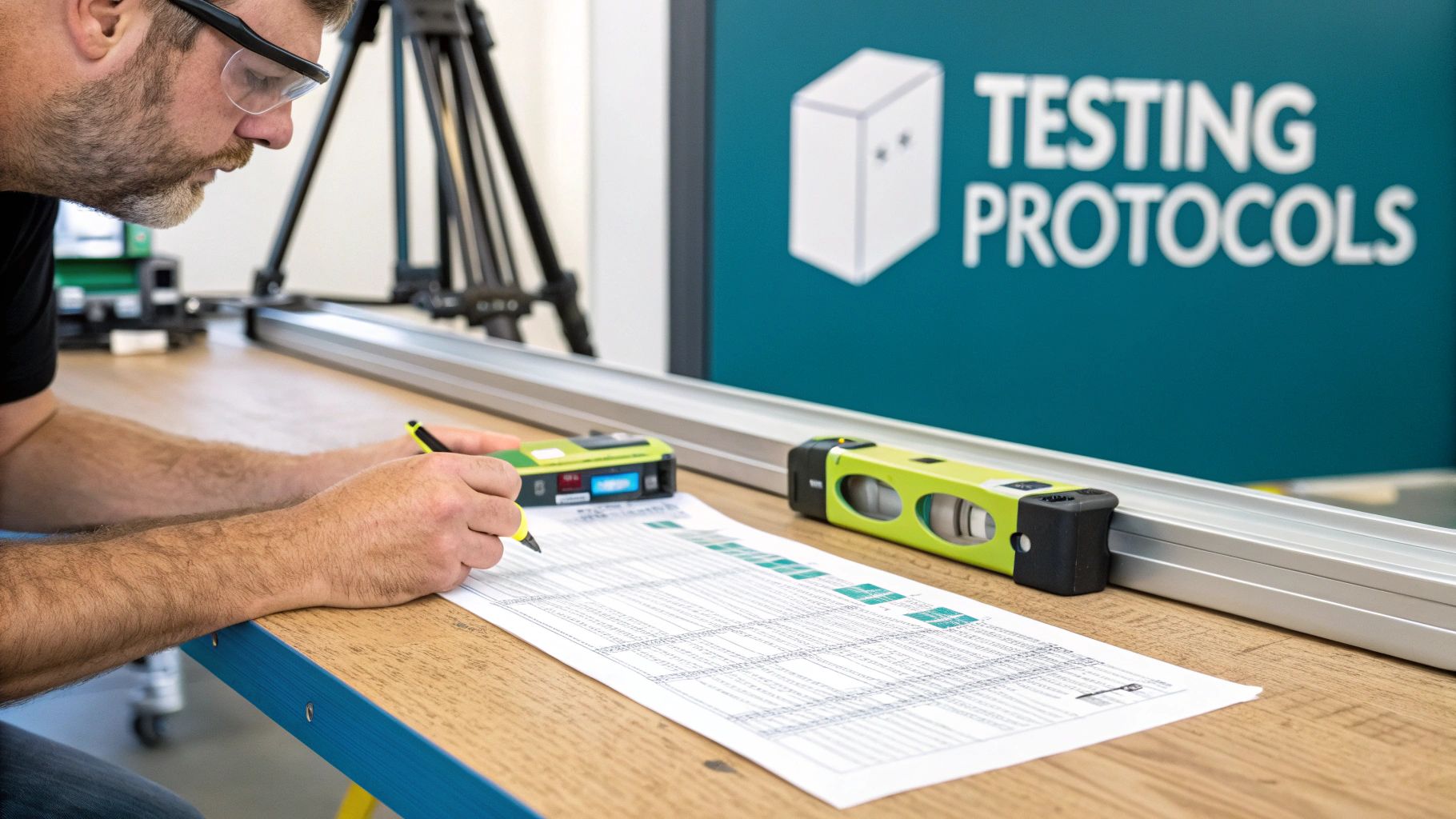
The first rule of reliable measurement is to secure your foundation. A portable force plate must be placed on a completely flat, stable, and level surface. An uneven or soft surface, such as a thick carpet, can absorb force and skew readings, compromising the validity of tests like jumps or balance assessments.
Always use a spirit level to confirm the plate is perfectly horizontal before starting a session. If testing in the field, a rigid, flat mat can create a suitable surface on grass or turf. This simple check is crucial for maintaining data integrity across different environments (5).
The Importance Of Calibration And Zeroing
Before every testing session, the device must be properly calibrated and zeroed. Zeroing the plate establishes a true zero baseline by accounting for the weight of the plate itself.
Most modern systems, like the Meloq EasyBase, make this process simple, often requiring just a single button press in the associated application. Making this a non-negotiable first step in your workflow is one of the easiest ways to eliminate a common source of error and maintain measurement accuracy.
A well-defined, repeatable testing protocol is essential for clinical practice. It ensures inter-rater reliability, meaning different clinicians in the same practice can collect comparable data, and supports the accurate tracking of a patient's progress over their entire rehabilitation journey.
Standardizing Your Testing Protocols
Consistency must extend to how the tests are conducted. A standardised protocol ensures every individual performs the movement in the same way, every time. Consider a common assessment like the Countermovement Jump (CMJ). Your protocol must clearly define every parameter.
Think about these critical details for a CMJ protocol:
- Starting Position: Specify foot placement. Instruct the individual to stand still for a few seconds so the system can establish a stable bodyweight reading.
- Arm Swing: Decide whether the test will be performed with hands on hips to isolate the lower body or with an arm swing for maximum performance. This decision should be applied consistently for all subsequent tests with that individual (6).
- Verbal Cues: Use the exact same verbal instructions for every test. Simple cues like, "Jump as high and as fast as you can," should be standardised to avoid influencing performance differently between sessions.
By controlling these details, you minimise variables that could affect the results. This ensures that any changes in jump height or force production are due to genuine physiological adaptations, not inconsistencies in testing procedures. This meticulous approach is what separates good data from great data.
Turning Raw Data Into Actionable Clinical Insights
Collecting precise data with a portable force plate is just the first step. The true skill lies in translating that raw data into smarter clinical decisions that help patients and athletes improve. It is about turning a set of metrics into a clear narrative of progress, risk, and readiness.
This transformation from numbers to insights is where your clinical expertise is paramount. The data provides the objective evidence, while you provide the context, interpretation, and subsequent plan of action.
From Population Norms To Individual Baselines
While comparing an athlete to population-wide normative data can be informative, the most powerful application of force plate technology is tracking an individual against their own baseline. A person’s unique biomechanics, injury history, and specific goals make their personal data the most relevant benchmark.
Establishing a healthy, pre-season baseline is the gold standard. It provides a clear, objective target to aim for during rehabilitation. Tracking an individual's recovery against their own optimal state is significantly more meaningful than comparing them to a generic average.
Interpreting Asymmetry: A Critical Skill
One of the most immediate and clinically relevant findings from force plate testing is limb asymmetry. This refers to a measurable difference in force production or control between the left and right sides of the body. While minor variations are normal, significant imbalances can be a point of clinical interest.
Research suggests that a limb asymmetry greater than a 10-15% threshold in key metrics, such as peak force during a jump, may be associated with an increased risk of injury (3). This threshold is not a diagnostic tool, but it serves as a crucial data point that prompts further investigation.
When a significant asymmetry is identified, it leads to important clinical questions. Is it a strength deficit? A neuromuscular control issue? A mobility restriction? The objective number sharpens your clinical judgment, guiding you toward a more targeted and effective intervention.
Using Data to Supercharge Patient Engagement
Objective data is a powerful tool for patient communication and motivation. Showing a patient a graph that clearly illustrates their progress is often far more compelling than simply telling them they are getting stronger. It makes the invisible visible.
Visualising their data can:
- Boost Adherence: When patients see tangible proof that their hard work is paying off, they are more likely to adhere to their rehabilitation programme.
- Build Confidence: Watching their asymmetry decrease or their jump height increase provides objective reinforcement that they are healing and progressing toward their goals.
- Set Clear Goals: You can use their baseline data to set specific, measurable targets, turning recovery into a collaborative process.
This data-driven conversation transforms the patient from a passive recipient of care into an active participant in their own recovery. The numbers provide a sense of ownership and a clear roadmap for their journey back to full function, enhancing the impact of your clinical practice.
Your Top Questions About Portable Force Plates, Answered
If you are considering adding a portable force plate to your clinical toolkit, you likely have some practical questions. Addressing these is key to feeling confident and integrating the technology seamlessly into your practice from day one.
Are Portable Force Plates As Accurate As Lab-Grade Systems?
This is a very common question. While large, embedded systems found in university biomechanics labs represent the gold standard for specific research applications, modern portable force plates offer excellent, clinically validated accuracy for the vast majority of real-world assessments (5).
Consider the analogy: large lab systems are like stationary electron microscopes—incredibly powerful but fixed in one location. Portable plates are like high-powered field microscopes; they bring objective measurement out of the lab and into the clinic or training facility. For the core tasks that matter most to clinicians—jump testing, strength assessments, and balance analysis—a quality portable plate provides the reliable data needed to make confident, informed decisions.
How Much Training Does It Take To Use One?
The learning curve is generally much gentler than might be expected. Modern systems are designed with clinicians in mind, featuring intuitive user interfaces. The hardware setup is typically as simple as finding a level surface and connecting to an app on a tablet or phone.
The real skill is not in operating the device itself, but in two key areas:
- Protocol Consistency: This is crucial. Running your testing protocols in the same manner every time is what makes your data comparable and meaningful.
- Clinical Interpretation: This is where your expertise is essential. It involves learning to see the story in the numbers and translating that data into actionable insights for your clients.
Reputable manufacturers offer educational resources, and most clinicians become proficient in data collection after a few guided sessions.
The technology is designed to be an accessible tool, not an intimidating hurdle. Its purpose is to augment your clinical expertise with objective data, not to require you to become a biomechanics engineer.
Can I Measure Asymmetry With A Single Force Plate?
Yes, absolutely. Excellent asymmetry data can be obtained from a single plate using unilateral (single-limb) testing. It is a straightforward and effective approach.
You have a patient or athlete perform tests like single-leg jumps or balance tasks on each leg separately. The software then allows for direct comparison of key metrics like jump height, ground contact time, or balance sway between the left and right sides (3). While a dual plate system measures these differences simultaneously during a bilateral movement, the single-plate protocol is a scientifically valid and widely used method for identifying imbalances in both clinical and field settings.
How Should I Reference The Data In My Reports?
To maintain a professional, evidence-based standard, it is best practice to be specific. In your reports, cite the exact metrics you are using (e.g., 'Countermovement Jump Height,' 'Rate of Force Development'). Always present the data in the context of the individual's own baseline—tracking their progress over time is where the real value lies.
When referencing general thresholds, such as the idea that a 10-15% asymmetry could be a risk factor, it is good practice to cite the peer-reviewed scientific literature that supports this concept (3). This not only adds credibility but also reinforces the principles of evidence-based practice.
References
- Maffiuletti NA, Aagaard P, Blazevich AJ, Folland J, Tillin N, Duchateau J. Rate of force development: physiological and methodological considerations. Eur J Appl Physiol. 2016;116(6):1091-1116.
- Prieto TE, Myklebust JB, Hoffmann RG, Lovett EG, Myklebust BM. Measures of postural steadiness: differences between healthy young and elderly adults. IEEE Trans Biomed Eng. 1996;43(9):956-966.
- Bishop C, Turner A, Read P. Effects of inter-limb asymmetries on physical and sports performance: a systematic review. J Sports Sci. 2018;36(10):1135-1144.
- Paterno MV, Schmitt LC, Ford KR, Rauh MJ, Myer GD, Huang B, Hewett TE. Biomechanical measures during landing and postural stability predict second anterior cruciate ligament injury after anterior cruciate ligament reconstruction and return to sport. Am J Sports Med. 2010;38(10):1968-1978.
- Lake J, Lauder M, Smith N, Shorter K. A comparison of the force- and time-based measures of a portable and laboratory-based force plate. Sports Technology. 2012;5(3-4):141-147.
- Markwick WJ, Bird SP, Tufano JJ, Seitz LB, Haff GG. The intraday reliability of the awakening cortisol response in athletes. Int J Sports Physiol Perform. 2015;10(6):765-769.
Ready to replace guesswork with precision? The Meloq ecosystem, featuring the EasyBase portable force plate, provides the accurate, repeatable data you need to elevate patient care and optimize performance. Explore our solutions and see how you can start making more data-driven decisions today.

Featured Product
EasyBase Force Plates
Portable dual force plate system for jump testing, balance & rehab. No subscription fees.
Learn More